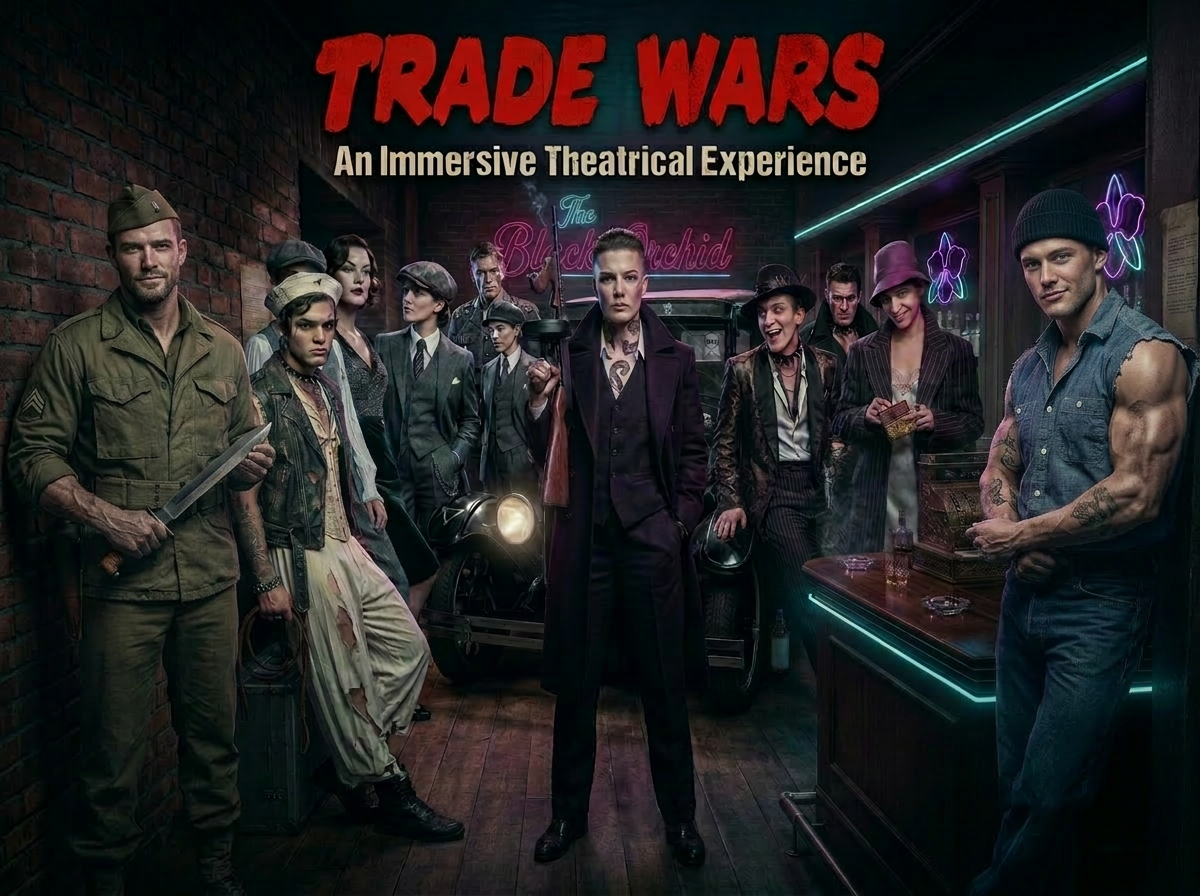
Trade (1920s slang): working‑class or ostensibly straight men who sold or secretly offered sex to other men — the sought‑after, risky counterpart in the underground gay scene.
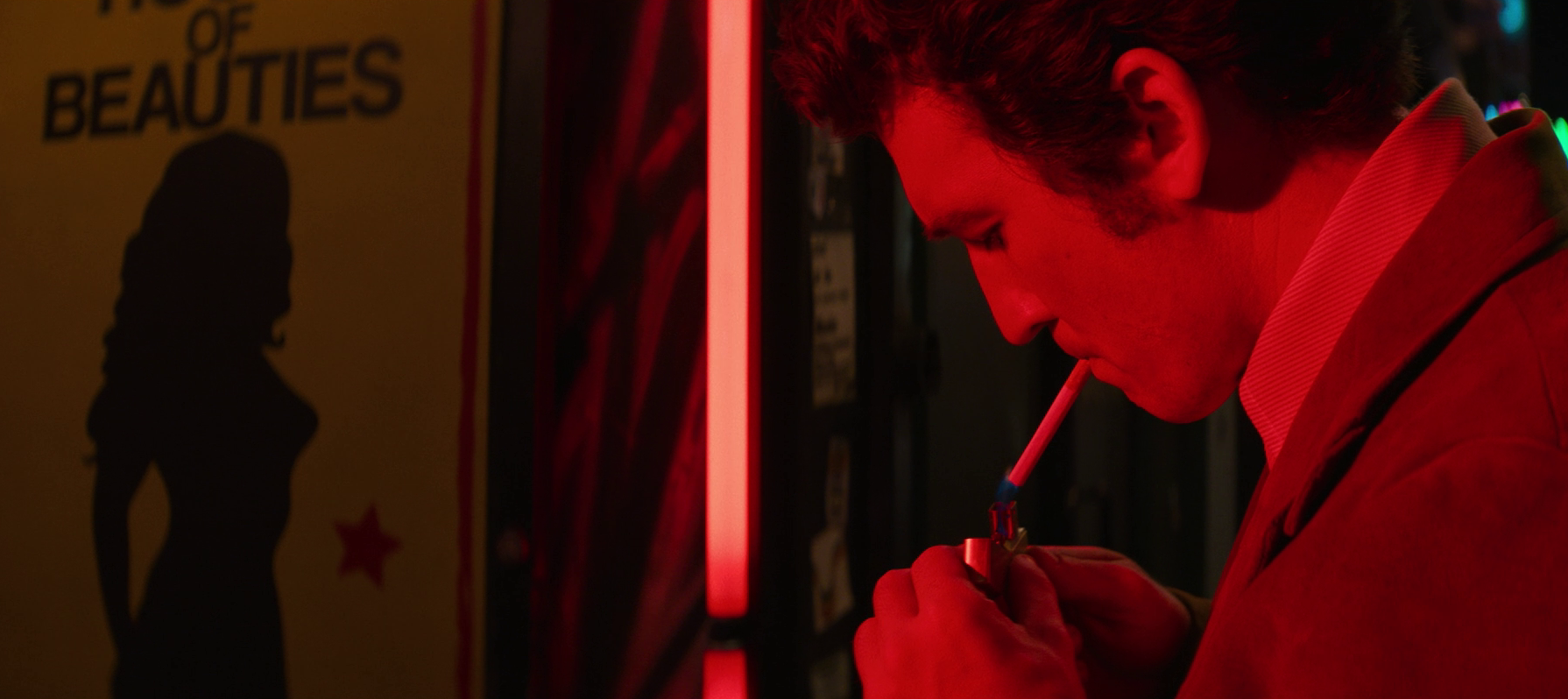
Set in a 1920’s-inspired network of neo-noir speakeasies and cruising spaces, TRADE WARS reimagines underground queer culture as two queer mafia’s at war to explore gender expression in love and in conflict. What begins as a cruisey, boozy immersive walk-through experience transforms into a nightclub cabaret performance that tells a star-crossed love story inspired by Shakespeare’s “Romeo and Juliet.” Masculinity and femininity collide in explosive, beautiful, dangerous ways, confronting the audience with their own erotic desires tied to gender expression, class and power.
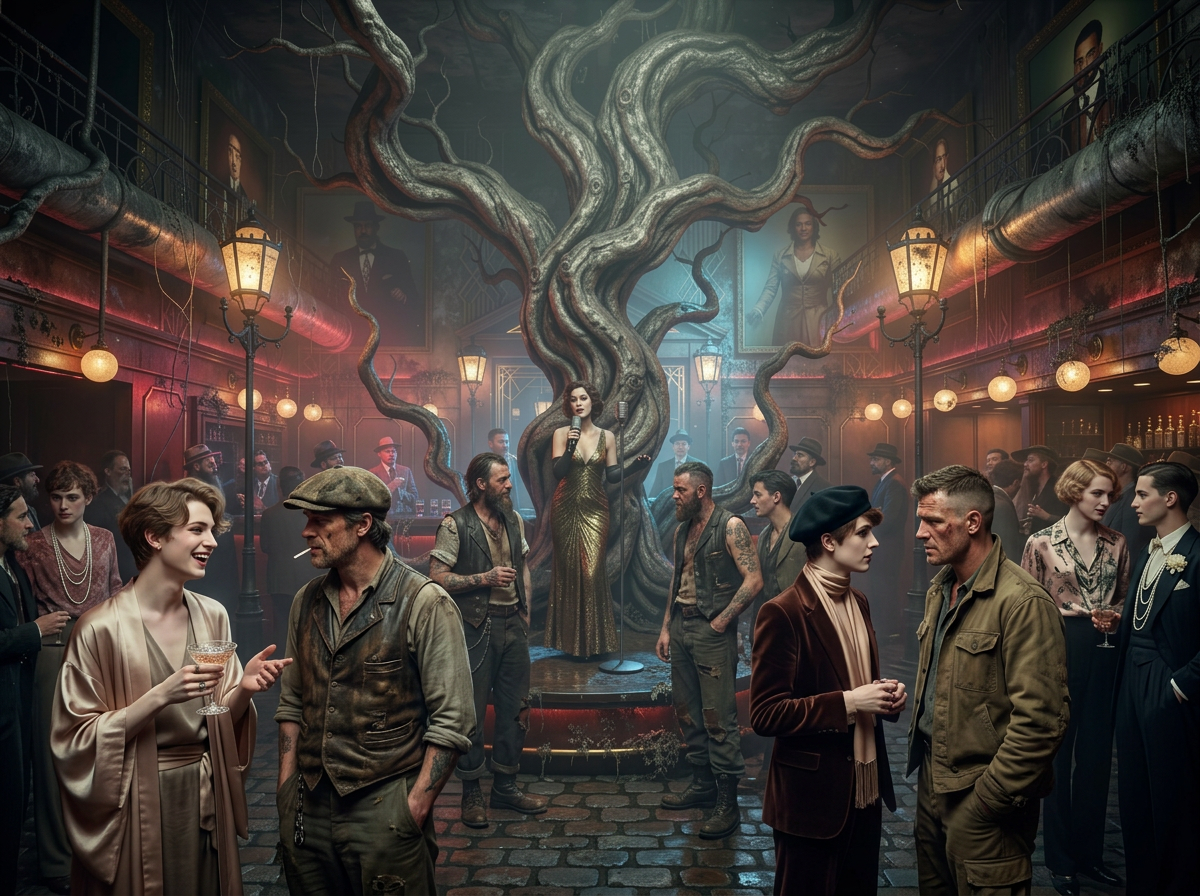
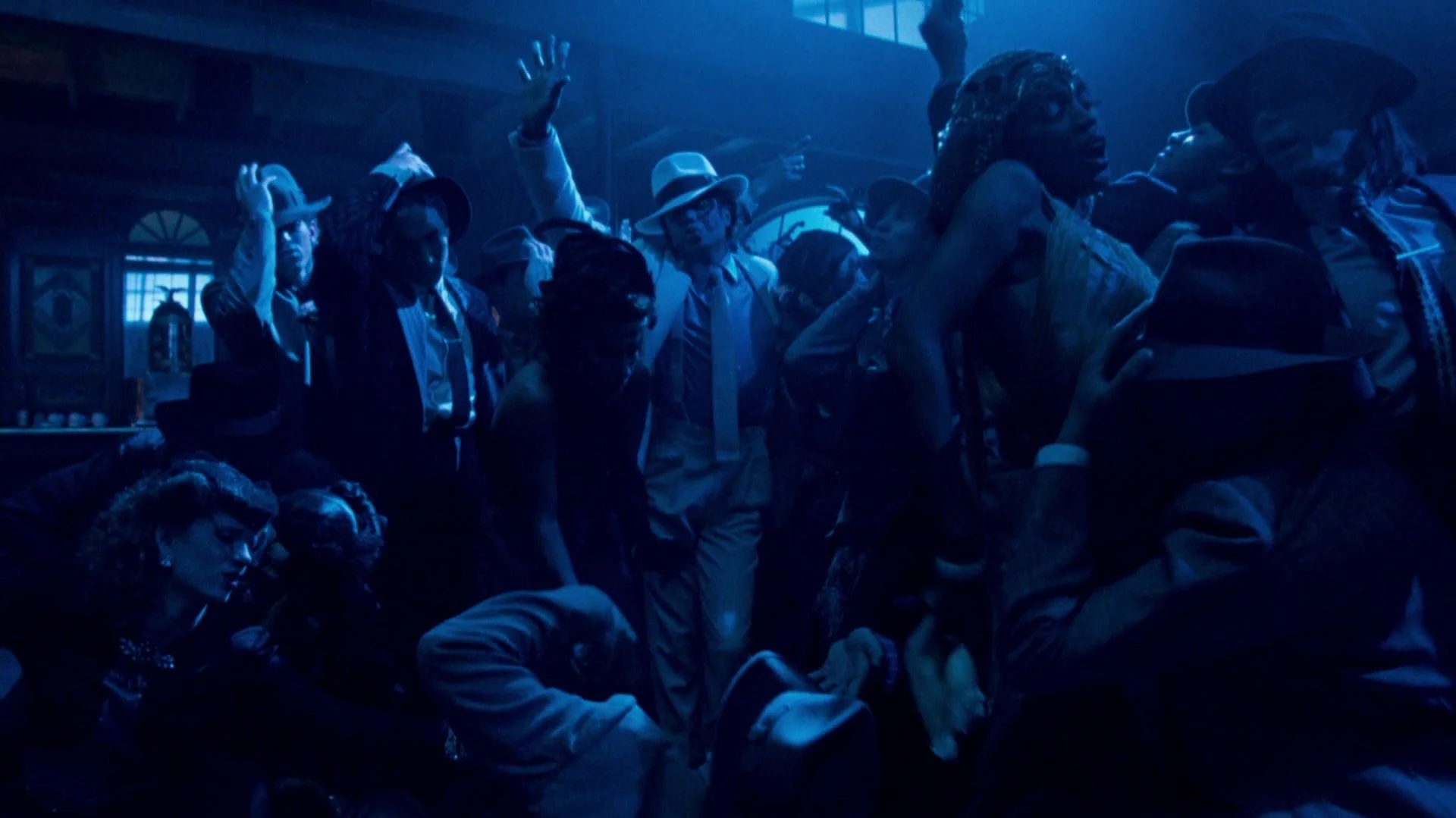
THE BLACK ORCHID is a bar where opposites clash in a limbo state. The time period is part 1920’s, part apocalyptic future. The location is part seedy basement speakeasy, part cruising park. In this surreal, fictionalized retro-future version of the 1920s, it’s less a slice of history than a poetic space to explore how gender consumes, confuses, and infatuates us then and now.

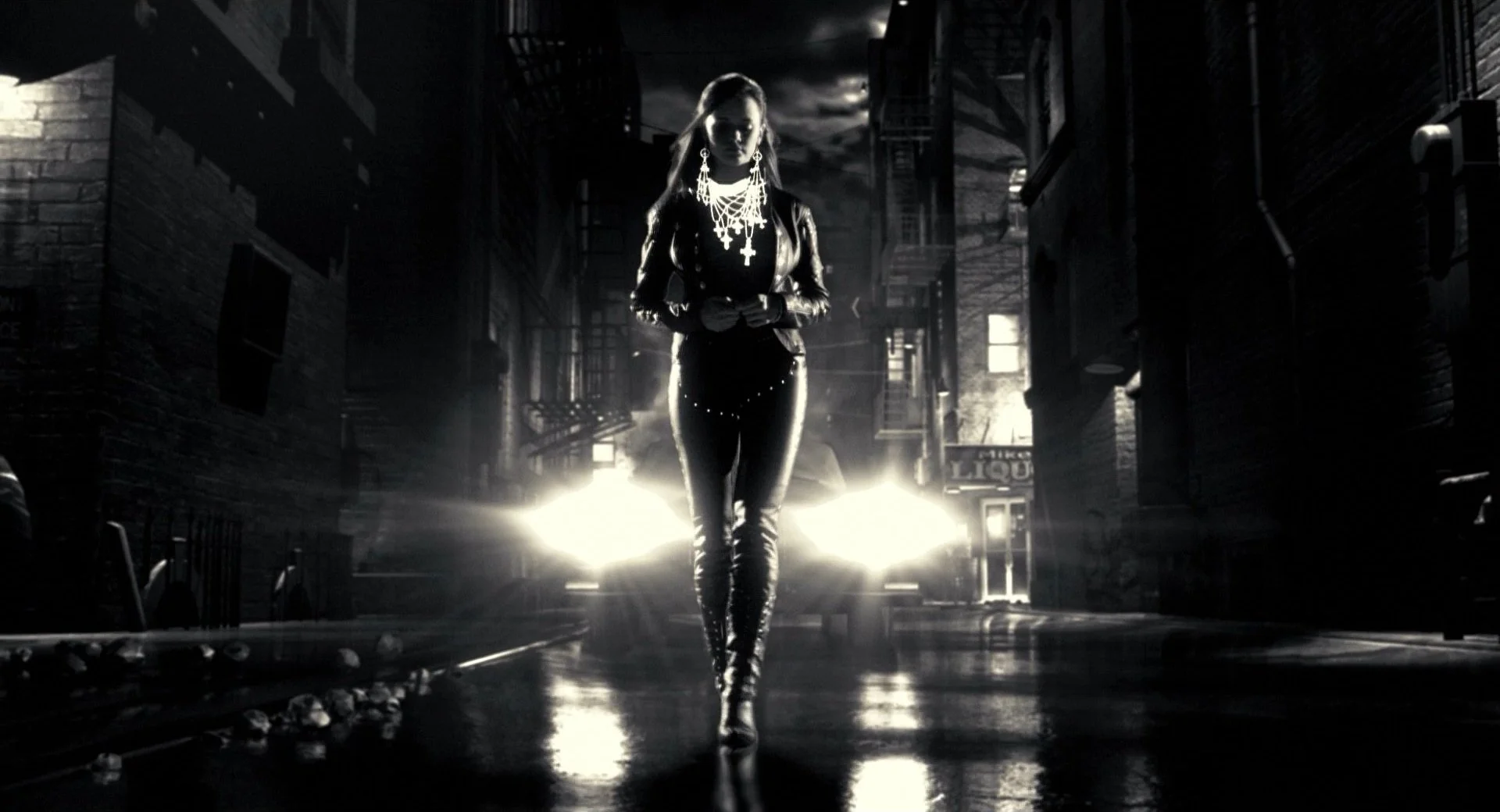
The aesthetic pulls from both classic film noir and more modern touchpoints like “Sin City,” from history and from the present day. Other points of reference are Cabaret, The Wild Party, and Hello, Again.
Sonically, the music mashes modern and vintage sounds and sensibilities together. The 1920’s sound is achieved through Post-Modern Jukebox style arrangements of contemporary songs, and the modern sound is achieved through electro-swing music that samples vintage music.
Artist examples include Post-Modern Jukebox, Parov Stelar, Tape Five, St. Vincent, Hozier, Thievery Corporation, and Caravan Palace.
CHARACTERS

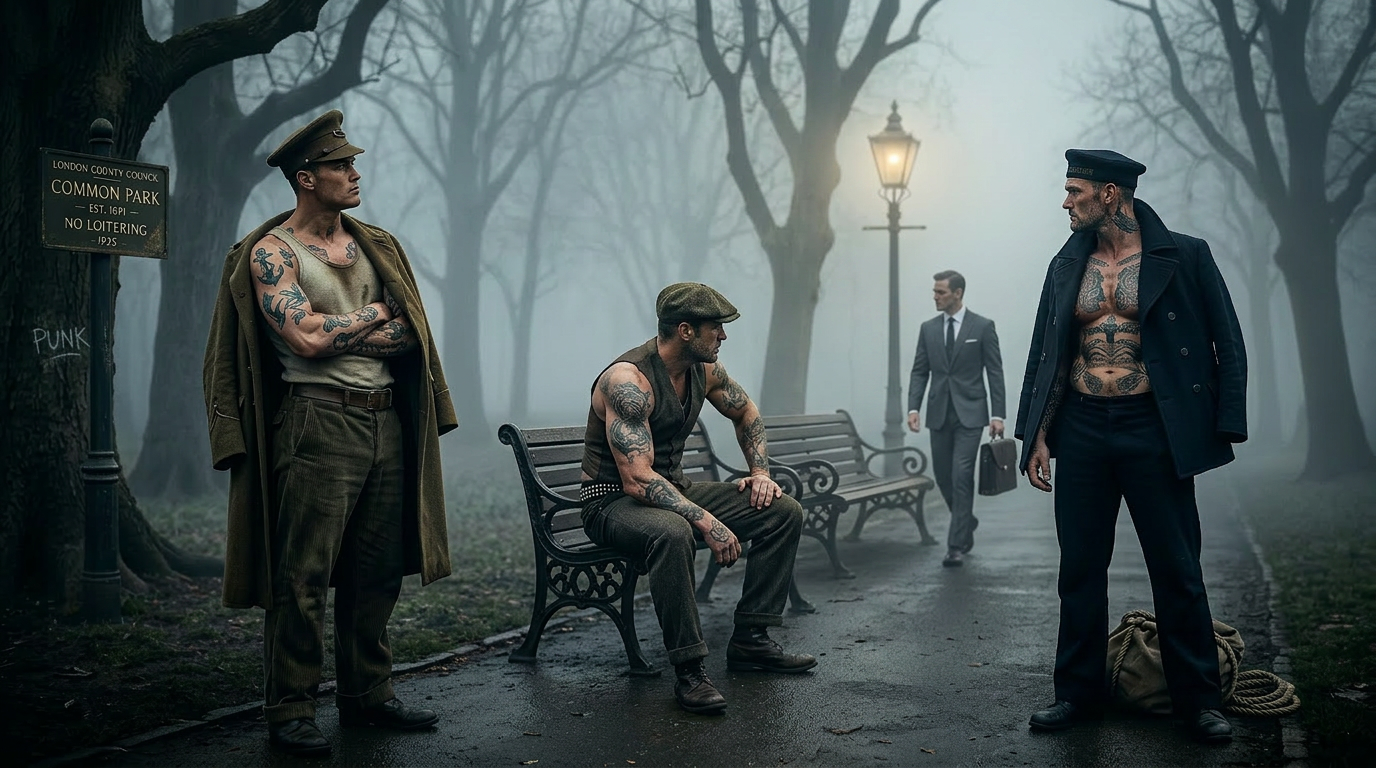
Daddy, a mafia-affiliated pimp, and his rough trade huslters: The Soldier, The Piers Worker, The Sailor, and the College Boy
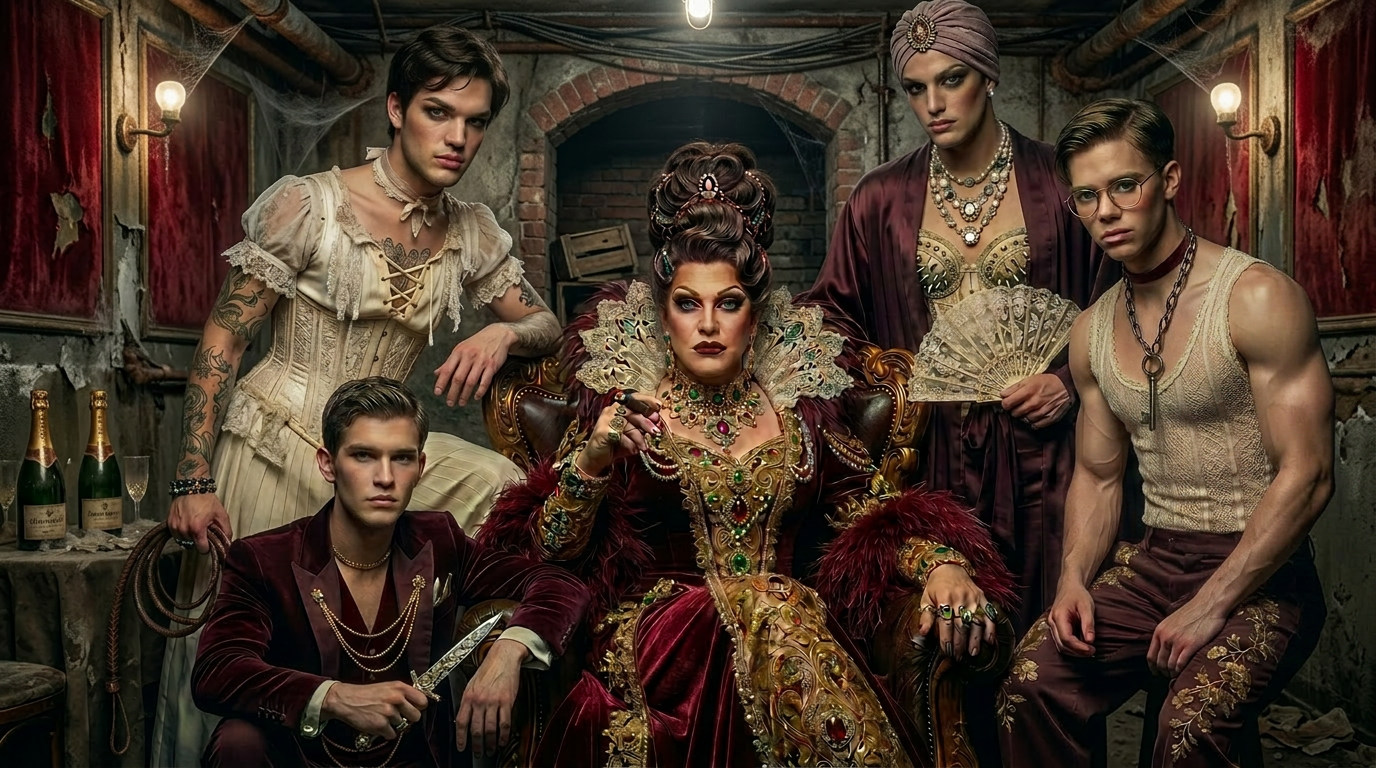
Momma, a prominent drag-queen madame, and her girls: a rowdy group of femme boy hustlers with a bite.
The Husband: A middle class man leading a double life.

The Mafia Prince: The chaotic twink son of the kingpin mafia boss who’s been tasked to manage the speak easy, and is on a power trip.

The Butch Lesbians: The Mafia Prince’s muscle.

The Sirens: Three Andrews Sisters-inspired fem lesbians, who each have a butch lesbian daddy.
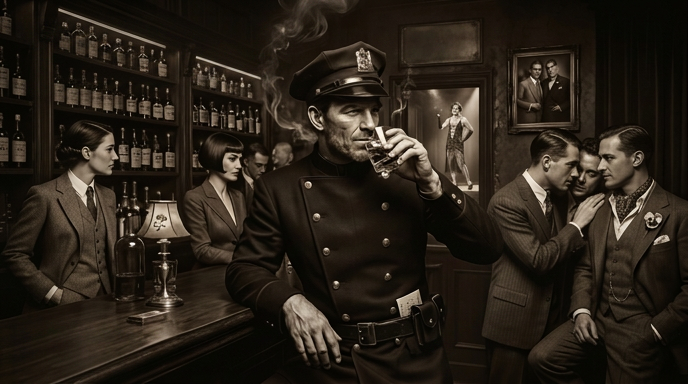
The Cop: He may wear the badge of the law, but everything is negotiable.
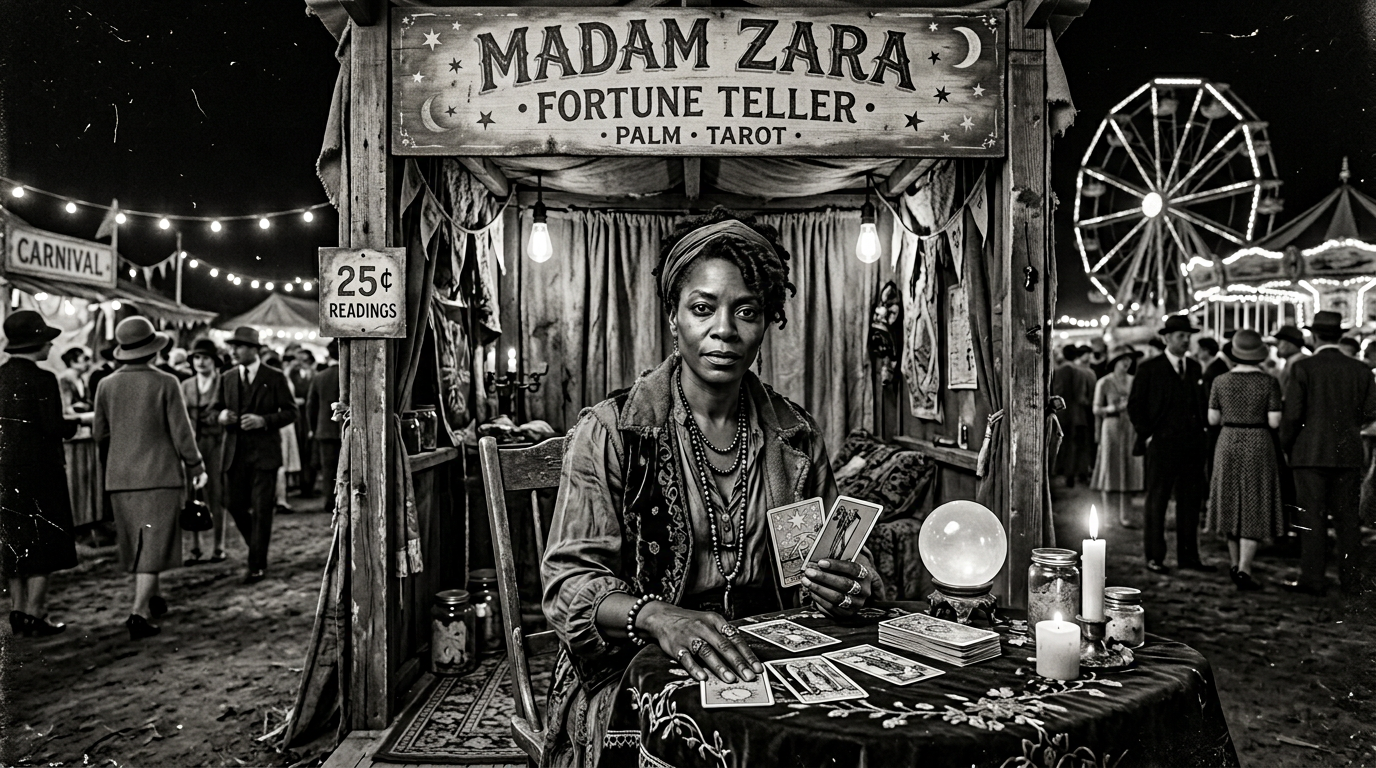
The Fortune Teller: Representing the mystical and mysterious nature of queerness.
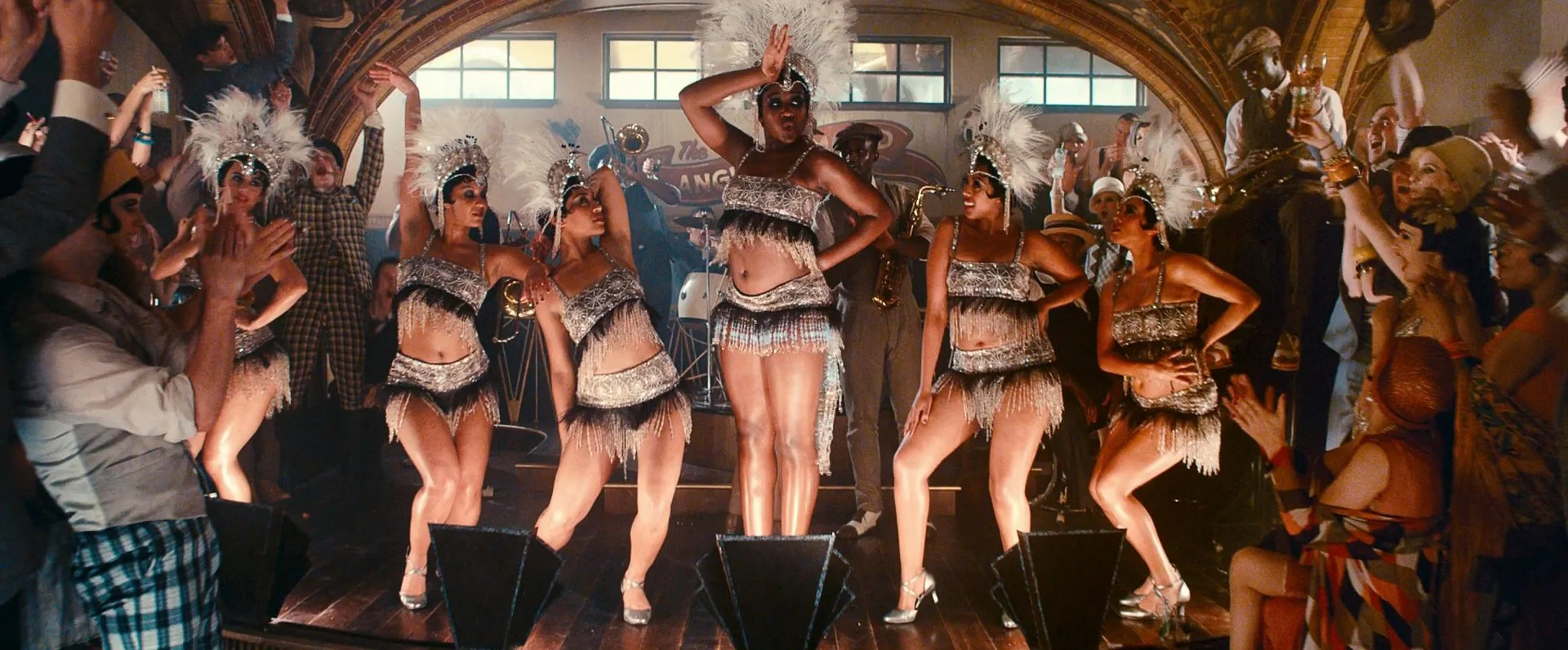
What begins as a walkabout, immersive experience, with private rooms, booze, and cruising, migrates into the main club room for an evening of wild acts that tell us stories featuring the characters we’ve just met. This format allows us to flesh out for the characters that the audience has already grown interested in on their own personal “pre-show” journeys.

We reinterpret the lyrics to the songs of Modern Jukebox, presenting an act with a scenario that is unexpected, and more dangerous as juxtaposition.
We explore the art and danger of the cruise is “WANNABE,” where three trade hustlers seduce and eventually rob The Husband to the sound of three Andrews Sisters-like singers.
In “LOVE FOOL,” our Mafia Prince holds the soldier hostage in his boudoir, who eventually succumbs to Stockholm Syndrome and falls for his captor.
The Sailor and The Husband explore gender expression in “NO DIGGITY” when the sailor has the masculine husband change into woman’s lingerie and become his sissy, dancing from suit to stockings into his dance.
Set to St. Vincent’s “SALVALJE,” the latin piers man struggles with his sexual identity and acts against his religious upbringing. This could never an aerial number.
In Hozier’s “WORK SONG,” a moment of tenderness, real love, is shared between a femme boy and his masculine lover.
Momma and Daddy fight over a new hustler recruit (an audience member) in “THAT BOY IS MINE,” exploring their own dangerous attraction to each other.
In “MAMBO RAP,” trade enjoys being Daddy’s sugar baby, later learning the cost that comes with being spoiled.
Every act is a way to get deeper into each character, and ultimately explore their complicated power dynamics. These acts are primarily danced, but may also include aerial. In the acts, and in the struggles and antics they reveal, we discover an incredibly creative means of survival and strength to forge a place somewhere in society when the rest of it wants you to disappear.
What begins as a walkabout, immersive experience, with private rooms, booze, and cruising, migrates into the main club room for an evening of wild acts that tell us stories featuring the characters we’ve just met. This format allows us to flesh out for the characters that the audience has already grown interested in on their own personal “pre-show” journeys.
We reinterpret the lyrics to the songs of Modern Jukebox, presenting an act with a scenario that is unexpected, and more dangerous as juxtaposition.
We explore the art and danger of the cruise is “WANNABE,” where three trade hustlers seduce and eventually rob The Husband to the sound of three Andrews Sisters-like singers.
In “LOVE FOOL,” our Mafia Prince holds the soldier hostage in his boudoir, who eventually succumbs to Stockholm Syndrome and falls for his captor.
The Sailor and The Husband explore gender expression in “NO DIGGITY” when the sailor has the masculine husband change into woman’s lingerie and become his sissy, dancing from suit to stockings into his dance.
Set to St. Vincent’s “SALVALJE,” the latin piers man struggles with his sexual identity and acts against his religious upbringing. This could never an aerial number.
In Hozier’s “WORK SONG,” a moment of tenderness, real love, is shared between a femme boy and his masculine lover.
Momma and Daddy fight over a new hustler recruit (an audience member) in “THAT BOY IS MINE,” exploring their own dangerous attraction to each other.
In “MAMBO RAP,” trade enjoys being Daddy’s sugar baby, later learning the cost that comes with being spoiled.
Every act is a way to get deeper into each character, and ultimately explore their complicated power dynamics. These acts are primarily danced, but may also include aerial. In the acts, and in the struggles and antics they reveal, we discover an incredibly creative means of survival and strength to forge a place somewhere in society when the rest of it wants you to disappear.